Miri & Sarawak: travel notes for festival week
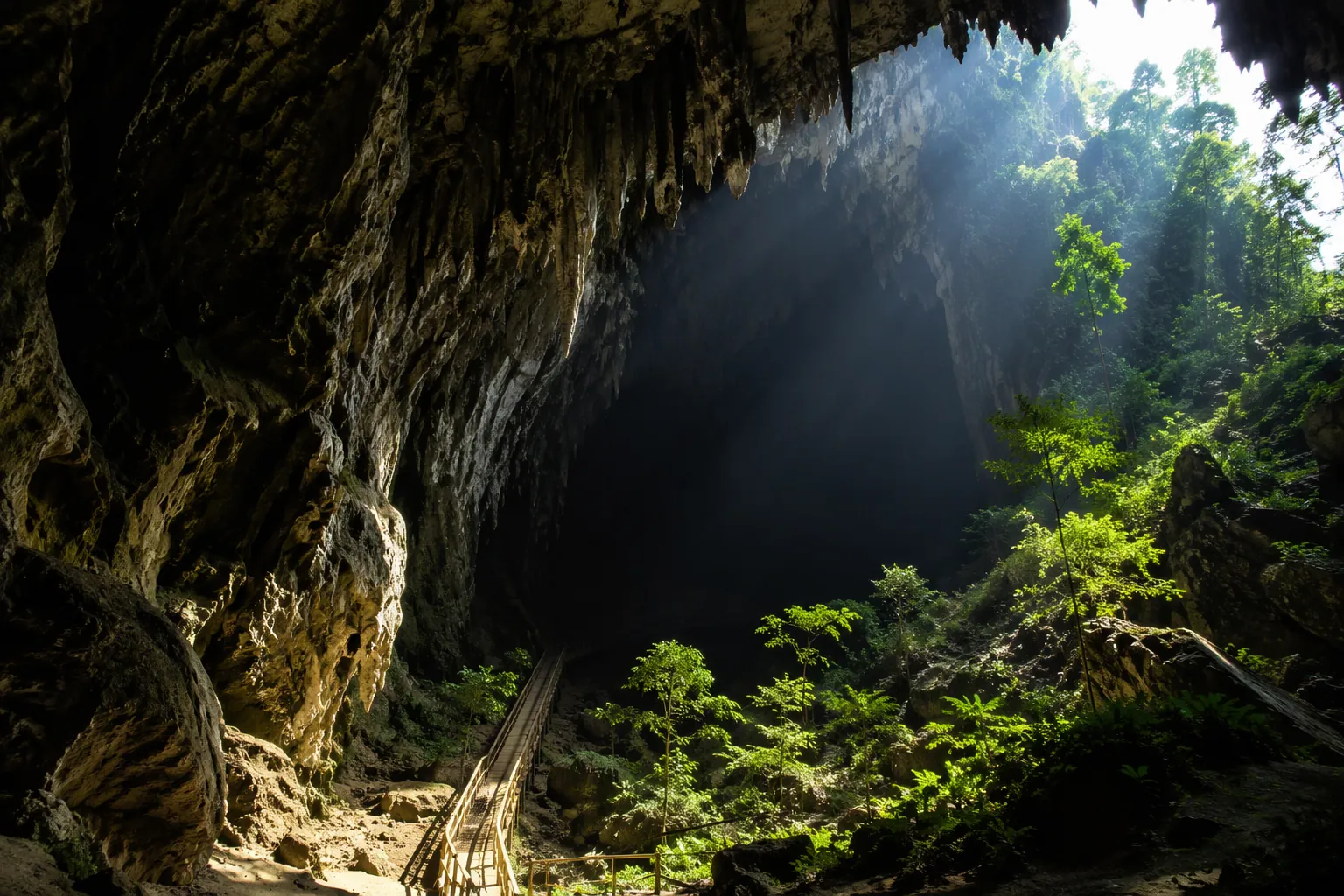
Miri is the rare festival city where the travel is the point. The Borneo Jazz weekend is two nights; the country around it, caves that held some of the earliest modern humans on earth, rainforested national parks, a coast that faces the whole South China Sea, is why you should stay the week.
Getting thereFlights into Miri
Miri Airport (MYY) is the gateway, with direct flights from Kuala Lumpur (the main hub: roughly 2 hours 20 minutes), Singapore and Kota Kinabalu. Malaysia Airlines and AirAsia share the trunk routes. Two rules for festival travel: book the moment you buy tickets (the December edition compresses KL–Miri seats), and consider flying in via Kuching instead if you want to pair the trip with the Rainforest World Music Festival's home ground. The two cities are a short hop apart.
From the airport, the city centre is about 15 minutes by car. Grab operates in Miri and works well; resort shuttles cover the main hotels.
- Fly: MYY from KL, Singapore or KK; book early for festival weekend.
- Stay: waterfront for festival walking distance; the 2026 edition is at Pullman Miri Waterfront.
- Do: Niah Caves day trip, Canada Hill and Tanjung Lobang sunsets, the food courts.
- Pack: rain shell (December is monsoon edge), headlamp and repellent for Niah.
The must do day tripNiah Caves: the oldest story in Southeast Asia
About two hours by road from Miri, Niah National Park protects one of Asia's best known archaeological sites. The visit is a small adventure in itself: entry is around RM20, a boat ferries you across the river, and a ~3km plank walk leads through swamp forest to the Great Cave: a cavern with one of the largest cave entrances on earth, its ceiling dark with swiftlets and bats.
The reason to go is the Deep Skull: human remains excavated here, dated to around 65,000 years: among the earliest evidence of modern humans in Southeast Asia. Walk further and you reach the Painted Cave, where ochre figures mark a burial ground. Standing in the Great Cave's mouth, looking out at the same forest those people saw, is the kind of hour that reorganises a trip around itself.
Practical: bring a headlamp (the interior is properly dark), at least 2 litres of water, insect repellent, and shoes with grip. The plank walk is well built but slick after rain. Start early, the caves are best before midday heat, and you'll want the afternoon back in Miri.
In the citySunsets, oil history and the food courts
Miri is Malaysia's original oil town. The country's first well, the Grand Old Lady, was spudded on Canada Hill in 1910, and the ridge above the city is now the best sunset seat in town: west facing, breezy, with the Petroleum Museum for context. The second sunset option is Tanjung Lobang beach, where the whole city seems to walk out at dusk. Do both on different evenings.
Eat where Miri eats: the city's hawker culture is strong on Sarawak laksa (different from and, locals insist, better than the Penang kind), kolo mee, and midin. The jungle fern that shows up stir fried at every self respecting Sarawakian table. The waterfront around the festival precinct has concentrated the good options in walking distance.
The ready made planFive days for the 20th edition
With more time, the obvious extensions are Lambir Hills National Park (30 minutes away: waterfalls and dipterocarp forest) or a flight to Kuching for Bako and the RWMF's home village. Sarawak rewards the long stay.
Two nights of jazz. Five days of reasons you stayed.